







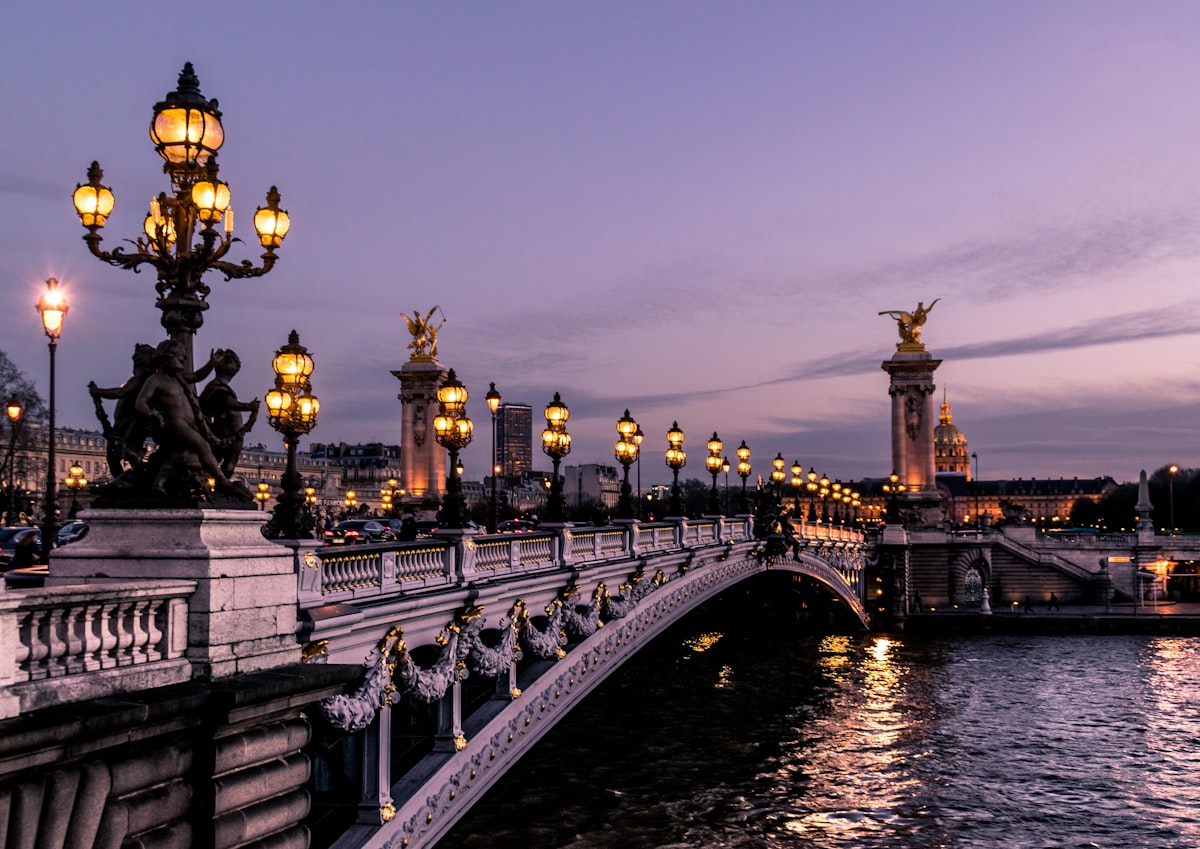
A classic first-timer's Paris itinerary covering the Eiffel Tower, Louvre, Montmartre, Notre-Dame district, and the Champs-Élysées. Designed for efficient routing with mid-range dining and pre-booked museum passes. Budget travelers can expect $800-1000; mid-range $1100-1400 per person for three days excluding flights.
At a Glance
Day 1 — Iconic Paris Landmarks
Start at the Eiffel Tower by 9am with a pre-booked summit ticket ($35). Lines build quickly after 10am. Spend 90 minutes exploring all three levels and enjoying panoramic views across the Seine, Trocadéro, and beyond. Afterward, walk through the Champ de Mars gardens and cross Pont d'Iéna to Trocadéro for photos (15-minute walk). The approach from Trocadéro offers the classic postcard perspective. Budget two hours total including the monument visit and surrounding gardens.
Grab lunch at a traditional French brasserie near Trocadéro or in the 7th arrondissement, where three-course prix-fixe menus run $22-32. Look for sidewalk seating and classic dishes like croque-monsieur, steak-frites, or duck confit.
Take metro Line 6 to Bir-Hakeim, then transfer to reach the Louvre (about 20 minutes). Enter with a timed-entry ticket ($20 pre-booked) around 2pm to avoid morning crowds. Focus on the Denon wing for the Mona Lisa, Winged Victory, and Italian Renaissance galleries, then explore the Richelieu wing's French sculpture court. Three hours gives you the highlights without museum fatigue. Exit through the glass pyramid into the Tuileries Gardens for a 15-minute stroll toward Place de la Concorde.
Walk along Rue de Rivoli to a traditional bistro in the 1st arrondissement for dinner ($30-45 per person with wine). Expect classic preparations: French onion soup, coq au vin, or sole meunière. After dinner, walk to the Seine and join an evening river cruise ($18-22, one hour). Departures run until 10pm from Pont Neuf. The illuminated bridges and floodlit monuments—especially Notre-Dame and the Eiffel Tower's hourly sparkle—make this a memorable first-night experience.
Stay in the Marais (3rd/4th arrondissement) for excellent metro access, walkability to multiple day-two sites, and a vibrant evening scene. The neighborhood offers mid-range hotels at $110-160 per night and puts you within 20 minutes of most major attractions.
Day 2 — Historic Heart & Montmartre
Walk from the Marais to Île de la Cité (15 minutes). Start at Sainte-Chapelle when it opens at 9am ($13 entry) to see the stained-glass windows in morning light—allocate 45 minutes. Walk five minutes to view Notre-Dame's exterior (interior closed for restoration through 2024, but the facade and square remain accessible). Continue to the Latin Quarter and explore the narrow streets around Boulevard Saint-Michel. Climb to the Panthéon ($13 entry) for both the interior monuments and rooftop views. Total morning cost: $26 plus coffee.
Find a casual crêperie or café in the Latin Quarter near the Sorbonne. Expect $14-20 for a savory galette and sweet crêpe combination, perfect for a quick midday refuel before the afternoon's hilltop exploration.
Metro from Cardinal Lemoine to Anvers (Line 2, about 25 minutes). Walk uphill through Montmartre's cobbled streets to Sacré-Cœur Basilica (free entry, but $7 for dome access). The climb is steep but manageable; alternatively, take the funiculaire included in your metro pass. Spend 90 minutes exploring the basilica, dome, and the artists' square at Place du Tertre. Wander Rue Lepic and the vineyard streets for photo opportunities. The neighborhood rewards slow exploration—budget three hours including a coffee stop at a Montmartre café.
Descend to Abbesses metro and head to Pigalle or the 9th arrondissement for dinner at a neighborhood bistro ($28-40). The area offers authentic spots frequented by locals rather than tourist crowds. After dinner, either catch a classic cabaret show (Moulin Rouge tickets start at $95) or simply stroll the illuminated streets back toward your hotel. If skipping the show, walk along Canal Saint-Martin (accessible via metro from Pigalle) for a relaxed evening atmosphere with local bars and cafés.
Continue in the Marais or shift to the Latin Quarter (5th arrondissement) if you prefer a Left Bank base. Both offer excellent dinner options, safe evening walks, and position you well for day-three museum visits and departure logistics.
Day 3 — Art, Shopping & Grand Boulevards
Start at Musée d'Orsay at opening time (9:30am) with a pre-booked ticket ($18). This former railway station houses the world's finest Impressionist collection—allocate two hours for Monet, Renoir, Degas, Van Gogh, and the top-floor views through the station clock. Exit and walk across Pont Royal to the Right Bank (10 minutes). Stroll through the Tuileries to Place de la Concorde, then walk up the Champs-Élysées, window-shopping the grand arcades and flagship stores. Reach the Arc de Triomphe by noon ($15 to climb; 284 steps but worthwhile for the star-pattern view of the radiating avenues).
Choose a café along the Champs-Élysées side streets (avoid the main avenue's overpriced options) or duck into the Golden Triangle neighborhood behind the avenue. Expect $18-28 for a quality lunch with less tourist markup. Alternatively, grab provisions at a gourmet food hall and picnic in Parc Monceau, a 10-minute walk north.
Depending on your flight time, either revisit a favorite neighborhood for shopping and final photos or explore the covered passages near Palais Royal (Galerie Vivienne, Passage des Panoramas). These 19th-century glass-roofed arcades house boutiques, antiquarian bookshops, and tea salons. If time allows, visit the Rodin Museum ($15) and its sculpture garden—an accessible 30-minute visit. Otherwise, return to your hotel, collect luggage, and head to the airport. CDG is 45-60 minutes via RER B ($12); Orly is 30-40 minutes via Orlybus or tram combinations ($10).
For evening departures, enjoy a final meal in the Saint-Germain-des-Prés area (6th arrondissement), where classic Parisian brasseries serve until late ($32-48 per person). The neighborhood's literary history and elegant streets make it an ideal final impression. If your flight is early evening, grab a jambon-beurre sandwich and pastry from a respected boulangerie near your hotel for a quintessential portable meal.
Same location as night two unless your departure time justifies a hotel nearer the airport. For very early flights from CDG, budget hotels in Roissy or along RER B save morning stress but sacrifice your final Parisian evening.
Where to Stay
Budget travelers should target the 11th or 18th arrondissements, where independent two-star hotels and small chains offer clean doubles at $80-110 per night. Expect compact rooms, basic breakfast, and neighborhood locations a metro ride from major sights but with authentic boulangeries and cafés nearby. Mid-range visitors will find the best value in the Marais, Latin Quarter, or 7th arrondissement at $140-190 per night in three-star boutique properties with period details, elevator access, and central locations that eliminate long commutes. These often include buffet breakfast. Luxury seekers can choose grand hotels near the Opéra, Saint-Germain, or the 8th arrondissement at $320-550 per night, offering concierge services, elegant public spaces, and prime addresses within walking distance of flagship shopping and Michelin-starred dining.
What to Skip
Skip the Crazy Horse or Lido cabarets unless you specifically want that experience—prices exceed $120-150 and Moulin Rouge delivers the same spectacle at slightly better value. Avoid eating on the Champs-Élysées itself; restaurants charge 30-40% premiums for the address while quality lags neighborhood bistros two blocks away. Skip the tourist-trap dinner cruises with mediocre set menus at $80-110; the evening sightseeing cruise achieves the same Seine views for a quarter of the price, then dine properly on land. Don't waste time on the Montparnasse Tower observation deck—the Eiffel Tower and Arc de Triomphe offer superior views and iconic settings. Finally, avoid unguided wandering in the Louvre; three hours is already tight for highlights, and getting lost in the Egyptian wing burns time better spent on signature pieces.
Budget Breakdown (Per Person)
Pricing reflects partner data and traveler review patterns. Actual costs vary by season, currency, and category. Flights not included.
Map of the Itinerary
Day one flows west to east: Eiffel Tower to Trocadéro (15-minute walk), metro to Louvre (20 minutes), then evening cruise from Pont Neuf near your Marais hotel (15-minute walk). Day two starts with a 15-minute walk west to Île de la Cité, then metro north to Montmartre (25 minutes including the uphill funiculaire or 10-minute climb). Day three begins on the Left Bank at Musée d'Orsay, crosses the Seine on foot (10 minutes), then walks the full Champs-Élysées to the Arc (25 minutes). Total metro rides: roughly eight trips over three days, making a carnet of ten tickets or a three-day Navigo Découverte pass worthwhile at $28 versus single tickets at $2 each.
Frequently Asked Questions
Should I buy a Paris Museum Pass for this three-day itinerary?
The two-day Museum Pass costs $60 and covers the Louvre, Orsay, Arc de Triomphe, Sainte-Chapelle, and Panthéon—all included in this itinerary. Buying separately totals $79, so the pass saves $19 plus grants skip-the-line access at most venues. However, the Eiffel Tower isn't included, and you'll need timed entries for the Louvre regardless. If you plan careful pre-booking and don't mind buying individual tickets, the savings are modest. The pass makes most sense for travelers who want flexibility to add spontaneous museum visits.
Is three days enough time to add a Versailles day trip?
Versailles requires a full day (8am departure, 6pm return) and creates a rushed overall experience when you have only three days in Paris. The palace and gardens deserve four to five hours, plus 90 minutes of round-trip transit from central Paris. This itinerary prioritizes essential Paris sights a first-timer shouldn't miss. If Versailles is a personal priority, consider dropping Montmartre and the Orsay on day two and dedicating that full day to Versailles, but recognize you'll sacrifice key Parisian neighborhoods and the Impressionist collection most visitors value highly.
What's the best way to handle airport transfers with luggage on day three?
For CDG, the RER B train ($12, 45 minutes) is most economical but involves stairs and crowding during rush periods. Shared shuttle vans cost $20-25 but require advance booking and add stops. Private taxi or rideshare runs $60-75 and makes sense for early departures or if traveling with two or more people splitting the cost. For Orly, the Orlybus ($10) is simpler than RER combinations. Plan to leave central Paris hotels three hours before international flight times to account for check-in and security, adding 30 minutes if departing during morning rush (7-9am).
Can I realistically visit both the Louvre and Musée d'Orsay in one day instead of splitting them?
Museum fatigue makes back-to-back visits counterproductive. The Louvre demands three hours minimum for highlights; the Orsay needs two hours. Attempting both in one day means six hours of standing, crowds, and visual overload, leaving you exhausted and diminishing your appreciation of both collections. Splitting them across days one and three, as this itinerary does, lets you absorb each museum properly and intersperses landmark visits, walking, and outdoor time. Travelers consistently report better experiences and memory retention when museums are separated by at least one day of varied activities.
How much should I budget for a Moulin Rouge show, and does it fit this itinerary?
Show-only tickets start at $95; dinner-and-show packages run $210-290 depending on seating and menu tier. The 9pm show fits day-two evening after Montmartre exploration since you're already in the neighborhood. However, this increases your day-two budget significantly and eliminates the relaxed Canal Saint-Martin option. The spectacle is iconic but very tourist-focused; if you're budget-conscious, the funds buy several excellent bistro meals and other experiences. Book at least two weeks ahead for preferred seating and slightly better pricing than walk-up rates.