









Paris vs Barcelona: Which Should You Visit in 2026?
Quick Answer
**Pick Barcelona by default.** It offers better weather year-round, more affordable prices, beach access, and world-class architecture concentrated in walkable neighborhoods. The food scene rivals Paris at half the cost. However, choose Paris if you're specifically passionate about art museums and classical European elegance, the Louvre, Musée d'Orsay, and Versailles create an unmatched museum experience that Barcelona's Picasso and Miró museums can't compete with.
At a glance
| Category | Paris | Barcelona |
|---|---|---|
| Best for | Classic museum lovers, architecture purists, Seine-side walks, café culture | Gaudí obsessives, beach + city combos, tapas crawls, late-night energy |
| Hotels from | $89/night | $150/night |
| Best time to visit | April to June, September to October | May to June, September to early October |
| Days needed | 4 to 6 days | 3 to 5 days |
| Vibe | Grand, formal, literary, bistro mornings | Loose, beachy, spontaneous, vermouth afternoons |
Cost comparison
Paris sneaks in cheaper on hotels but ties or loses on meals. Barcelona’s food scene is more snackable and spread out, which keeps costs lower if you skip table service. Here’s the breakdown.
Hotels (per night, double occupancy):
- Paris budget: $89 to $130 (18th arrondissement or east Marais)
- Paris mid-range: $160 to $240 (Saint-Germain, Latin Quarter)
- Paris luxury: $350 to $700+ (8th arrondissement, near Champs-Élysées)
- Barcelona budget: $150 to $200 (Gràcia, El Raval)
- Barcelona mid-range: $220 to $320 (Eixample, Gothic Quarter)
- Barcelona luxury: $400 to $800+ (beachfront, Passeig de Gràcia)
You can find hotels in Paris starting at $89 in neighborhoods like Belleville or near Gare de l’Est, both metro-connected and safe.
Daily budget per traveler (food, transit, entry fees, one drink):
- Paris budget: $70 to $95 (boulangerie breakfast, museum pass, metro day ticket)
- Paris mid-range: $150 to $200 (bistro lunch, wine bar dinner, taxis)
- Paris luxury: $350+ (tasting menus, car service, theatre tickets)
- Barcelona budget: $60 to $80 (mercado breakfast, metro pass, pintxos crawl)
- Barcelona mid-range: $130 to $180 (tapas lunch, cocktail bar, Uber pool)
- Barcelona luxury: $320+ (Michelin spots, private tours, rooftop clubs)
Flights (roundtrip, economy):
- From NYC: Paris $420 to $650, Barcelona $480 to $720
- From London: Paris $90 to $180 (Eurostar included), Barcelona $110 to $220
- From LA: Paris $650 to $950, Barcelona $750 to $1,100
Total 5-day trip estimate per person (mid-range traveler, flights from NYC, hotel shared):
- Paris: $1,650 to $2,100
- Barcelona: $1,750 to $2,250
The gap is narrow. Paris wins on lodging rates, Barcelona wins on food flexibility and shorter average meal times, which matters when you’re packing in Gaudí houses.
Things to do, head to head
Top 3 in Paris
Musée d’Orsay: The impressionist mother lode. You’re standing in a converted Belle Époque railway station looking at Monet’s water lilies, Degas ballerinas, Van Gogh’s self-portraits. It’s less crowded than the Louvre, better lit, and the top-floor café overlooks the Seine through a giant clock face. Budget 2.5 hours. Entry is $17, or free if you’re under 26 and from the EU.
Sainte-Chapelle: A Gothic jewel box on Île de la Cité with 15 stained-glass panels that glow red and blue when afternoon sun hits. It was built in 1248 to house Christ’s crown of thorns, and the upper chapel feels like standing inside a kaleidoscope. Lines form by 10 a.m., so book a timed ticket ($13) or go at 5 p.m. Pair it with a walk to Shakespeare and Company bookstore five minutes south.
Belleville and Parc des Buttes-Chaumont: Skip Montmartre’s crowds and head to the 20th arrondissement. Belleville is scruffy, multicultural, full of natural wine bars and Vietnamese bakeries. Walk north to Buttes-Chaumont, a hilly park with a temple perched on a fake cliff, waterfalls, and zero tourists. Locals jog here, kids ride ponies, and you can see Sacré-Cœur in the distance without climbing it.
Top 3 in Barcelona
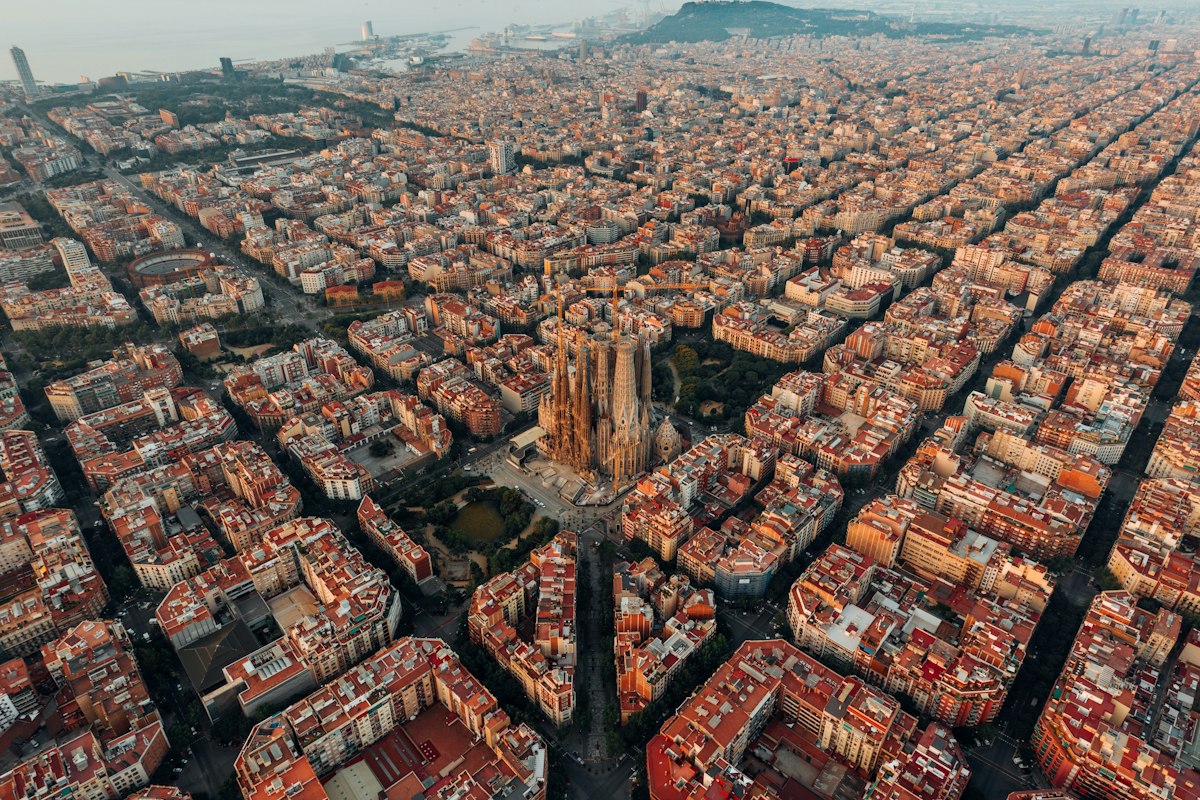
Sagrada Família: Gaudí’s unfinished cathedral is somehow both a construction site and a world wonder. The Nativity Façade looks like melted wax, the interior columns branch like trees, and the stained glass throws purple and green pools across the floor. You need a timed ticket ($38 including tower access), and you need to go early or at sunset. It’s taller than you expect and weirder in person.
Park Güell: Another Gaudí project that feels like a fever dream. Mosaic lizards, gingerbread gatehouses, a wavy bench covered in broken tiles that overlooks the city and the Mediterranean. The monumental zone requires a ticket ($14), but the surrounding park is free and offers better views. Go at 9 a.m. or after 6 p.m. to dodge tour groups, and wear good shoes because the hills are steep.
El Born and the Picasso Museum: El Born is Barcelona’s tightest, most atmospheric quarter, full of medieval alleys, tapas counters, and boutique vermouth bars. The Picasso Museum holds 4,200 works, heavy on his Blue Period and Las Meninas reinterpretations. Entry is $14 (free Thursdays after 6 p.m. and the first Sunday of each month). Pair it with lunch at El Xampanyet, a hole-in-the-wall cava bar with anchovies and pan con tomate.
Food: Barcelona wins. Paris has higher peaks (three-Michelin-star temples, legendary bistros), but Barcelona’s tapas-and-mercado culture makes spontaneous eating easier and cheaper. You graze, you stand at counters, you order five small things and move on.
Nightlife: Barcelona by a mile. Bars open at 10 p.m., clubs heat up at 2 a.m., beach clubs stretch into Sunday afternoon. Paris nightlife is excellent if you know where to go (Oberkampf, Belleville, Pigalle), but it closes earlier and costs more.
Culture: Paris takes it. The density of museums (Louvre, Orsay, Rodin, Orangerie, Centre Pompidou) and the literary/artistic legacy (Hemingway, Balzac, Satie, Sartre) is unmatched. Barcelona has Picasso and Miró, but Paris built entire movements.
Nature: Barcelona. You have actual beaches (Barceloneta, Bogatell), Montjuïc hill with cactus gardens, and Collserola park for hiking. Paris has gorgeous parks (Luxembourg, Tuileries, Bois de Vincennes), but no coast and no elevation.
When to go
Paris: April through June is ideal. Temperatures run 55 to 72°F, chestnut trees bloom in the Tuileries, café terraces reopen. May 1 is Labor Day and everything closes. June gets you long daylight (sunset past 10 p.m.) but rising hotel rates. July and August hit 80 to 85°F, many locals leave, tourist crowds thicken. September and October are beautiful (60 to 70°F, golden light, fewer lines), though October sees more rain. November through March is cold (35 to 50°F), gray, but cheap. Christmas markets in December add charm, but January is dreary. March starts to warm up but is unpredictable.
Barcelona: May, June, September, and early October are the sweet spot. Temperatures run 65 to 78°F, beaches are swimmable, and you avoid the worst summer crush. July and August hit 82 to 88°F with sticky humidity, packed beaches, and inflated prices. Everyone’s there, which is fun or annoying depending on your tolerance. Late August sees locals return from vacation and some businesses reopen. November through February is mild (50 to 60°F) and quiet, perfect for museums and tapas without lines, but the beach isn’t appealing. April can be rainy but pleasant (60 to 68°F). La Mercè festival in late September brings fireworks and street parties. Sant Jordi (April 23) fills La Rambla with book and rose stalls.
Who should pick Paris
- Anyone who wants to walk through the Louvre’s Egyptian wing at 9 a.m. with a coffee and zero agenda.
- Couples looking for classic romance (Seine cruises, rooftop dinners, endless bridges to kiss on).
- Art history majors or museum addicts who need to see the actual Mona Lisa, Monet’s Impression Sunrise, and Rodin’s Thinker.
- Travelers who love formal gardens, grand boulevards, and cities that feel like they were designed by a single brain.
- People who want a walkable, metro-efficient city where you can cover 20 arrondissements in five days without renting a car.
Who should pick Barcelona
- Travelers who want beach access without sacrificing urban culture (30 minutes from Sagrada Família to sand).
- Gaudí fans who will spend two days just on his buildings and not feel weird about it.
- Night owls who want dinner at 10 p.m., drinks at midnight, and dancing until 5 a.m. is normal.
- Foodies who prefer small plates and market grazing over formal three-course meals.
- Anyone who finds Paris too buttoned-up and prefers a city with flip-flops, street art, and spontaneous vermouth breaks.
Or, visit both?
You absolutely can. A high-speed TGV runs from Paris Gare de Lyon to Barcelona Sants in 6.5 hours ($60 to $140 depending on booking window). Fly into Paris, spend three or four days there, train south, spend three days in Barcelona, fly home from there. Or reverse it.
Sample combined itinerary: Day 1 to 3 in Paris (Orsay, Latin Quarter, Marais, Montmartre if you must). Day 4 morning train to Barcelona, arrive early afternoon, walk La Rambla and El Born. Day 5 Sagrada Família and Gràcia. Day 6 Park Güell morning, beach afternoon, Born nightlife. Day 7 Montjuïc or a day trip to Montserrat, evening flight home.
If you only have five or six days total, pick one city. The train eats half a day, and both places deserve focus. But if you have eight days or more, combining them makes sense. The train ride through southern France is lovely, and the tonal shift from Parisian formality to Barcelona chaos is fun.
Bottom line
Paris edges this one for sheer density of iconic experiences and the fact that it’s slightly cheaper to sleep there. If you want museums, classic European architecture, and a city that feels like the capital of something important, Paris delivers. Barcelona wins if you want looser vibes, beach proximity, and nightlife that doesn’t require a reservation. For most first-time Europe visitors, Paris is the safer bet. But if you’ve done London or Rome and want something with more Mediterranean energy and less formality, find hotels in Barcelona and go wild on the tapas circuit.
FAQs
Which is cheaper, Paris or Barcelona?
Paris is marginally cheaper on hotels (starting at $89 versus $150), but Barcelona wins on daily food and transport costs. A mid-range traveler in Paris spends around $150 to $200 per day on meals, metro, and entry fees. In Barcelona, that drops to $130 to $180 thanks to tapas culture and cheaper public transit. Flights from the U.S. favor Paris by $30 to $100 roundtrip. Overall, a five-day trip costs about the same ($1,650 to $2,100), with Paris slightly ahead if you’re budget-conscious on lodging.
Which is safer?
Both cities are safe for tourists, with the usual European pickpocketing risks in crowded areas. Paris sees theft around the Eiffel Tower, metro lines 1 and 4, and Gare du Nord. Barcelona’s hotspots are La Rambla, the Gothic Quarter, and Barceloneta beach. Violent crime is rare in both. Barcelona feels more relaxed, Paris slightly more formal. Keep your bag zipped, don’t leave phones on café tables, and you’ll be fine in either place.
Which is better for families?
Paris has more kid-friendly infrastructure: playgrounds in every park, crêpe stands, puppet shows in the Tuileries, and the Cité des Sciences. The metro is stroller-navigable (with effort), and there’s a Disneyland Paris 40 minutes out. Barcelona counters with beaches, Park Güell’s whimsy, the aquarium, and a generally looser vibe. Teens prefer Barcelona’s energy. Kids under 10 like Paris’s polish and predictable meal times. Both work, but Paris edges it for under-eights.
Which is better for first-time international travelers?
Paris. It’s more English-friendly in tourist zones, the metro is clearer, and the main sights (Eiffel Tower, Louvre, Arc de Triomphe) are globally iconic and easy to navigate. Barcelona requires slightly more improvisation (Catalan signage, later meal times, less English outside El Born and Gràcia). If you’ve never left the U.S. or your home country, Paris holds your hand more gently. If you’re comfortable winging it, Barcelona rewards spontaneity better.
Can I see both in one trip?
Yes. The TGV high-speed train covers Paris to Barcelona in 6.5 hours for $60 to $140. It’s a scenic ride through Provence and along the Mediterranean coast. If you have eight or more days, split them (four in Paris, four in Barcelona). If you only have five or six days, pick one city and do it properly. Both places deserve three full days minimum, and the train journey eats half a day including station logistics.