









Rome vs Venice: Which Should You Visit in 2026?
Quick Answer
**Visit Rome by default.** It offers more iconic sights (Colosseum, Vatican, Sistine Chapel), better food, and works as Italy's gateway city with more days of worthwhile activities. Choose Venice instead if you've already seen Rome or have limited mobility, Venice is compact, walkable, and delivers its magical canal experience in just 2-3 days versus Rome's ideal 4-5 days.
At a glance
| Rome | Venice | |
|---|---|---|
| Best for | Ancient history buffs, pizza fanatics, budget travelers | Romance seekers, art lovers, architecture photographers |
| Hotels from | $75/night | $160/night |
| Best time to visit | April to May, September to October | April to May, September to early November |
| Days needed | 4 to 6 days | 2 to 3 days |
| Vibe | Chaotic, sprawling, layers of civilization piled on top of each other | Intimate, maze-like, frozen in the 18th century |
Cost comparison
Rome wins the affordability contest by a comfortable margin. Venice charges premium prices for everything from a cappuccino to a gondola ride, while Rome offers substantially more budget options across the board.
Hotels per night (2026 estimates):
- Rome: Budget $75 to $110 (Monti, Testaccio neighborhoods), mid-range $130 to $200 (near Termini or Trastevere), luxury $280 to $500+ (Spanish Steps, Via Veneto)
- Venice: Budget $160 to $220 (Cannaregio, Santa Croce), mid-range $240 to $380 (San Marco edge, Dorsoduro), luxury $450 to $900+ (Grand Canal palazzos)
Daily budget per traveler:
- Rome: Budget $60 to $85 (street food, house wine, free attractions), mid-range $120 to $180 (sit-down meals, museum passes), luxury $250 to $400+ (Michelin dining, private tours)
- Venice: Budget $90 to $120 (cicchetti bars, vaporetto pass), mid-range $170 to $260 (canalside dining, skip-the-line tickets), luxury $350 to $550+ (gondola serenades, Harry’s Bar)
Flights (roundtrip, 2026):
- NYC: $450 to $750 to Rome (FCO), $500 to $850 to Venice (VCE)
- London: $80 to $180 to Rome, $90 to $200 to Venice
- LA: $650 to $1,100 to Rome, $700 to $1,200 to Venice
Total 5-day trip estimate per person (flights from NYC, mid-range):
- Rome: $1,800 to $2,400
- Venice: $2,600 to $3,400
You can find hotels in Rome at significantly better rates than Venice, especially if you book neighborhoods like Pigneto or San Lorenzo where locals actually live.
Things to do head to head
Top 3 in Rome
The Colosseum and Roman Forum: Walking through the 2,000-year-old amphitheater where gladiators fought lions feels absurdly real. The Forum stretches behind it, a jumble of columns and temples where Julius Caesar gave speeches. Book the underground tour (around $65) to see the hypogeum where animals were caged. Skip the line or arrive at 8:30am sharp, otherwise you’re waiting 90 minutes in August heat.
Vatican Museums and Sistine Chapel: Four miles of hallway crammed with Renaissance art leads to Michelangelo’s ceiling. The museum complex holds the Raphael Rooms, the Gallery of Maps (underrated), and enough marble statuary to populate a small city. Go Wednesday afternoon after the papal audience clears out, or book the Friday night opening in summer. St. Peter’s Basilica is free and equally stunning.
Trastevere and Campo de’ Fiori: Cross the Tiber to Trastevere for tangled medieval streets, ivy-covered trattorias, and the best cacio e pepe in the city at Flavio al Velavevodetto. Campo de’ Fiori hosts a morning market where Romans buy zucchini flowers and porcini, then transforms into an aperitivo scene at sunset. Both neighborhoods deliver the lived-in Rome that tourists miss while circling the Trevi Fountain.
Top 3 in Venice
St. Mark’s Basilica and Doge’s Palace: The basilica glitters with 85,000 square feet of Byzantine mosaics, gold leaf covering every surface like a jewelry box. Next door, the Doge’s Palace connects via the Bridge of Sighs to the prison where Casanova escaped in 1756. The Secret Itineraries tour ($85) takes you through hidden chambers and the torture room. Both get mobbed by noon, so pay the $30 for 9am reserved entry.
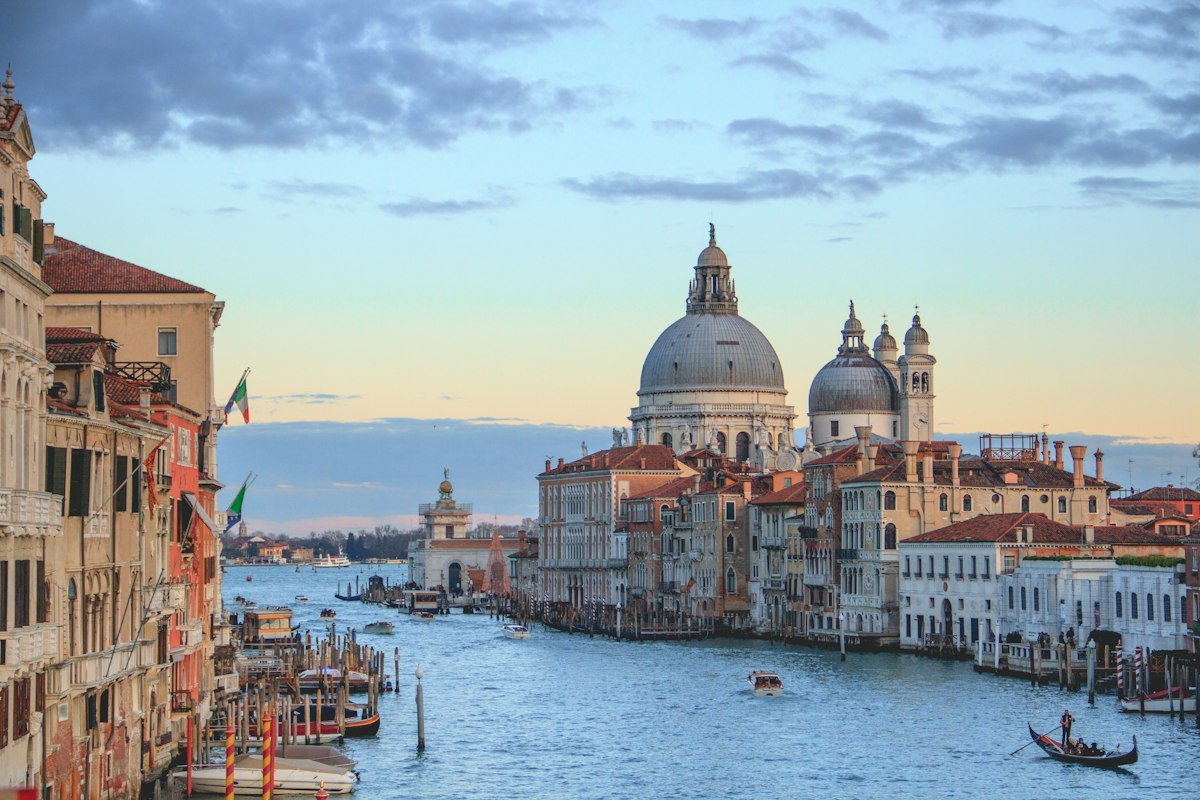
Getting lost in Dorsoduro and Cannaregio: Venice reveals itself away from San Marco. Dorsoduro has the Peggy Guggenheim Collection, spritz bars along the Zattere waterfront, and Santa Maria della Salute jutting into the Grand Canal. Cannaregio offers the old Jewish Ghetto, neighborhood bakeries selling zaleti cookies, and canals where you’ll walk 15 minutes without seeing another tourist.
Rialto Market and a Bellini at Harry’s Bar: The Rialto fish market opens at 7:30am with Adriatic sole, spider crabs, and seppie (cuttlefish) on ice. Vendors have been here since 1097. Afterward, walk to Harry’s Bar (yes, expensive at $30 for a Bellini, yes, worth it once) where Hemingway drank and they invented carpaccio. The place feels like stepping into a 1950s photograph.
Food: Rome destroys Venice here. Carbonara, amatriciana, carciofi alla giudia (fried artichokes), supplì, porchetta sandwiches, pizza al taglio that costs $3 and changes your life. Venice has excellent seafood (sarde in saor, fritto misto) and cicchetti bar culture, but half the restaurants near San Marco serve reheated tourist slop at $25 per mediocre pasta plate.
Nightlife: Rome wins again. Testaccio clubs, rooftop bars in Monti, jazz venues in Trastevere, and Romans who eat dinner at 10pm and stay out until 3am. Venice essentially closes at midnight outside of a handful of student bars near Ca’ Foscari University.
Culture: Tie, different flavors. Rome offers 2,700 years of continuous habitation, Caravaggio paintings in churches, the Pantheon’s impossible dome. Venice counters with Tintoretto, Vivaldi’s church, Renaissance palaces, and the unique fact that it exists on water at all.
Nature: Neither city excels here, but Rome has Villa Borghese gardens, the Appian Way for bike rides past ancient tombs, and day trips to Tivoli’s waterfalls. Venice has the Lido beach (mediocre) and lagoon islands (Burano’s colorful houses, Torcello’s Byzantine mosaics), so call it even.
When to go
January to March: Rome sees 50 to 60°F and occasional rain, thin crowds, hotel rates down 40%. Perfect for museum marathons. Venice drops to 40 to 50°F, fog rolls in dramatically, and acqua alta (flooding) peaks in November through February. Bring waterproof boots. Both cities feel melancholy and local.
April to May: Peak time for both. Rome hits 65 to 75°F, jasmine blooms, Easter crowds surge then disperse. Venice reaches 60 to 70°F, canals sparkle, the Biennale art festival opens in odd years. Book hotels three months ahead or pay 30% more. Still worth it for the weather alone.
June to August: Rome becomes a 90°F inferno. Locals flee to the coast in August (Ferragosto holiday mid-month), many restaurants close. Venice stays cooler at 80°F thanks to sea breezes but cruise ships dump 25,000 people daily into a city built for 60,000 residents. Both are expensive and packed, though Rome has air-conditioned museums while Venice has gelato and shaded campi.
September to October: Rome’s second golden season. Temperatures drop to 70 to 80°F, market stalls overflow with porcini and figs, the city exhales. Venice enjoys 65 to 75°F and spectacular light for photography. Crowds thin after mid-October. Hotel prices drop 20% from summer peaks.
November to December: Rome stays mild at 55 to 65°F, Christmas decorations go up by early December, fewer tourists except around New Year’s. Venice gets atmospheric (read: wet and cold) at 45 to 55°F, but December brings holiday markets and locals reclaim their city. Flooding risk increases but seeing an empty San Marco at sunrise makes it worthwhile.
Who should pick Rome
- History obsessives who want to stand where emperors walked and see Western civilization’s architectural foundation in three dimensions
- Families with kids who need space to run (Villa Borghese), affordable pizza lunches, and gladiator stories that make ancient ruins exciting
- Budget travelers stretching euros, since Rome offers quality meals under $15 and free attractions like the Pantheon
- First-time Italy visitors who want the greatest hits (better train connections to Florence, Naples, Pompeii from Rome’s position)
- Food-focused travelers who worship at the altar of Roman pasta and want to take a cooking class in someone’s Trastevere apartment
Who should pick Venice
- Romantic couples celebrating anniversaries who want gondola rides, canalside prosecco, and a city that functions as a stage set for grand gestures
- Architecture and art students studying Byzantine mosaics, Palladian villas, Venetian Gothic palaces, and Tintoretto’s massive canvases
- Photographers chasing golden hour reflections on water and compositions impossible anywhere else on earth
- Travelers who’ve already done Rome and Florence and want Italy’s most unique (and difficult to return to) destination
- Anyone who finds crowds less oppressive when you can duck down a side canal and disappear into residential Venice within 90 seconds
Or visit both?
Absolutely do both. The high-speed Frecciarossa train connects Rome’s Termini to Venice’s Santa Lucia station in 3 hours 45 minutes, tickets run $35 to $90 depending on how far ahead you book. A logical week looks like this: fly into Rome (4 nights), train to Venice (3 nights), fly home from Venice. Or reverse it. Both cities have international airports with competitive fares.
The combination gives you ancient empire plus Renaissance maritime republic, chaos plus intimacy, affordable plus splurge-worthy. You’ll spend around $300 to $450 total on intercity trains and extra lodging compared to a single-city trip, but you get two completely different Italys for that investment.
Add Florence (90 minutes from either city) if you have 10 days. Skip Bologna unless you’re a serious food nerd (you should be).
Bottom line
Rome takes this comparison on value, variety, and practicality. You get more days of meaningful sightseeing, better food at half the price, and a city that functions as an actual capital rather than an outdoor museum. Venice delivers unmatched visual drama and romantic atmosphere, but it’s expensive, small, and frankly exhausting after 72 hours of navigating bridges and crowds. First-time Italy visitors should pick Rome and day-trip to Pompeii or Tivoli. Venice works better as a focused 3-day add-on or a return trip when you’ve already covered the Roman Forum. That said, if your primary goal is proposing to your partner in the most photogenic spot in Europe or you’re an architect who dreams about Ca’ d’Oro, Venice wins despite the price tag. You can find hotels in Venice that justify the splurge, particularly small palazzos in Dorsoduro or Cannaregio where you wake up to canal views and church bells.
FAQs
Which is cheaper, Rome or Venice?
Rome costs 35 to 45% less across hotels, food, and daily expenses. A decent Rome hotel runs $130 versus $240 in Venice. Lunch in Rome costs $12 to $18 for pasta and wine, while Venice charges $20 to $30 for comparable quality. Budget $60 to $85 daily in Rome compared to $90 to $120 in Venice for the same experience level. Even gelato costs more in Venice ($4 versus $2.50).
Which is safer?
Both cities are very safe by American standards. Rome has more pickpockets working Termini station and the metro, targeting distracted tourists with open backpacks. Venice has virtually no street crime but tourists fall into canals after too much Aperol (it happens). Petty theft is the only real concern in either city. Don’t leave phones on cafe tables, watch your bag on crowded buses, and you’ll be fine.
Which is better for families?
Rome handles families better thanks to parks (Villa Borghese has rowboat rentals and a zoo), easier stroller navigation on streets versus bridges, and kid-friendly food beyond pasta. The gladiator stories and Bocca della Verità (Mouth of Truth) engage children. Venice’s stairs, water hazards, and lack of playgrounds make it tougher with kids under 8, though teenagers appreciate the uniqueness. Families with mixed-age kids should pick Rome.
Which is better for first-time international travelers?
Rome offers easier logistics, an international airport with more connections, English widely spoken in tourist areas, and straightforward metro navigation. Venice’s layout confuses even experienced travelers, addresses make no sense, and you’re walking or taking water buses everywhere with luggage. Rome’s sprawl feels more familiar to Americans used to big cities. Start with Rome, graduate to Venice.
Can I see both in one trip?
Yes, and you should. The cities sit 245 miles apart with high-speed trains running every 30 minutes from early morning to evening. The 3 hour 45 minute journey costs $35 to $90 and delivers countryside views of Umbria and the Po Valley. Book a week minimum (4 nights Rome, 3 nights Venice), or 10 days if adding Florence. Flying into one city and out of the other avoids backtracking and costs the same on most international routes.