









Bali vs Thailand: Which Should You Visit in 2026?
Quick Answer
**Verdict: Pick Thailand by default.** It offers better value, more diverse experiences (from Bangkok's buzz to northern mountains and southern islands), superior food scene, and easier inter-destination travel. However, choose Bali if you want a concentrated cultural experience in a compact area, temples, rice terraces, beaches, and yoga retreats are all within short distances, making it ideal for shorter trips or those who prefer staying put.
At a glance
| Category | Bali | Thailand |
|---|---|---|
| Best for | Yoga retreats, rice terraces, single-island immersion | Island hopping, street food tours, diverse landscapes |
| Hotels from | $45/night | $60/night |
| Best time to visit | May to September (dry season) | November to February (cool and dry) |
| Days needed | 7 to 10 days | 10 to 14 days |
| Vibe | Spiritual, compact, rice-paddy zen | Energetic, sprawling, contrast-heavy |
Cost comparison
Bali wins the budget battle by a slim margin, but Thailand offers more geographic variety for your dollar.
Hotels (per night, double occupancy):
- Bali budget: $45 to $75 (guesthouses in Ubud, basic beach stays in Canggu)
- Bali mid-range: $90 to $180 (private pool villas in Seminyak, boutique hotels in Uluwatu)
- Bali luxury: $250 to $600+ (clifftop resorts, jungle sanctuaries near Tegallalang)
- Thailand budget: $60 to $90 (hostels in Bangkok, beach bungalows on Koh Lanta)
- Thailand mid-range: $110 to $220 (boutique hotels in Chiang Mai, beachfront in Krabi)
- Thailand luxury: $300 to $800+ (overwater villas in Koh Samui, Bangkok penthouses)
You can find hotels in Bali starting around $45 for solid guesthouses with breakfast included, while similar quality in Thailand runs closer to $60.
Daily budget per traveler (food, transport, entry fees):
- Bali budget: $35 to $50 (warungs, scooter rental, temple donations)
- Bali mid-range: $75 to $140 (nicer restaurants, private drivers, surf lessons)
- Bali luxury: $200 to $400+ (fine dining, spa days, helicopter tours)
- Thailand budget: $40 to $60 (street food, public transport, basic tours)
- Thailand mid-range: $90 to $160 (sit-down meals, Grab rides, national park fees)
- Thailand luxury: $250 to $500+ (private chefs, yacht charters, premium experiences)
Flights (roundtrip economy, 2026 estimates):
- NYC to Bali: $950 to $1,400 (one stop, 22 to 26 hours)
- London to Bali: $750 to $1,200 (one stop, 18 to 21 hours)
- LA to Bali: $850 to $1,300 (one stop via Tokyo or Singapore, 20 to 24 hours)
- NYC to Bangkok: $800 to $1,200 (one stop, 19 to 23 hours)
- London to Bangkok: $600 to $950 (nonstop available, 11 to 12 hours)
- LA to Bangkok: $700 to $1,100 (nonstop available, 16 to 17 hours)
Total 5-day trip estimate (flights + hotels + daily expenses, per person):
- Bali budget: $1,400 to $1,800
- Bali mid-range: $2,200 to $3,100
- Thailand budget: $1,500 to $1,900
- Thailand mid-range: $2,400 to $3,300
Things to do: head to head
Top 3 in Bali
Tegallalang Rice Terraces and Ubud’s cultural core: The emerald-green stepped paddies 20 minutes north of Ubud are Bali’s postcard shot, but the real draw is the surrounding art villages. Spend a morning at Campuhan Ridge Walk, hit the Blanco Renaissance Museum, then grab babi guling (suckling pig) at Ibu Oka. The entire Ubud area packs temples, monkey forests, and yoga studios into a compact 10-square-mile zone.
Uluwatu Temple and Kecak fire dance: Perched on a 230-foot cliff on the Bukit Peninsula, Pura Luhur Uluwatu delivers sunset drama and one of Bali’s best traditional performances. The nightly Kecak dance ($7 entry) starts at 6 p.m., and the hundred-voice chant against an Indian Ocean backdrop beats any resort show. Afterward, descend to Jimbaran Bay for grilled seafood dinners on the sand ($18 to $30 per person).
Mount Batur sunrise trek: The 5,633-foot active volcano requires a 3:30 a.m. wakeup and a two-hour climb, but you’ll summit in time to watch dawn break over the caldera lake. Guides cost $35 to $50 per person (breakfast cooked over volcanic steam included), and the black sand slopes are manageable for anyone with moderate fitness. Clear mornings reveal Mount Agung 30 miles east.
Top 3 in Thailand
Phi Phi Islands and Railay Beach: The limestone karsts jutting from turquoise Andaman waters define southern Thailand’s coastline. Maya Bay on Phi Phi Leh (closed 2018 to 2022 for reef recovery) reopened with a 300-visitor daily cap, making it less of a zoo. Railay Beach, accessible only by longtail boat from Ao Nang, offers world-class rock climbing on 600-foot cliffs and zero cars. Day tours from Krabi run $40 to $70.
Bangkok’s Grand Palace and street food circuit: The 1782 complex housing Wat Phra Kaew (Temple of the Emerald Buddha) remains Bangkok’s must-see, though the $17 entry and crowds test patience. The payoff is Thai craftsmanship at its peak: gold-leafed stupas, intricate murals, and the 26-inch jade Buddha statue. Afterward, hit Yaowarat Road in Chinatown for crab omelets, mango sticky rice, and grilled satay (dinner for two, $12).
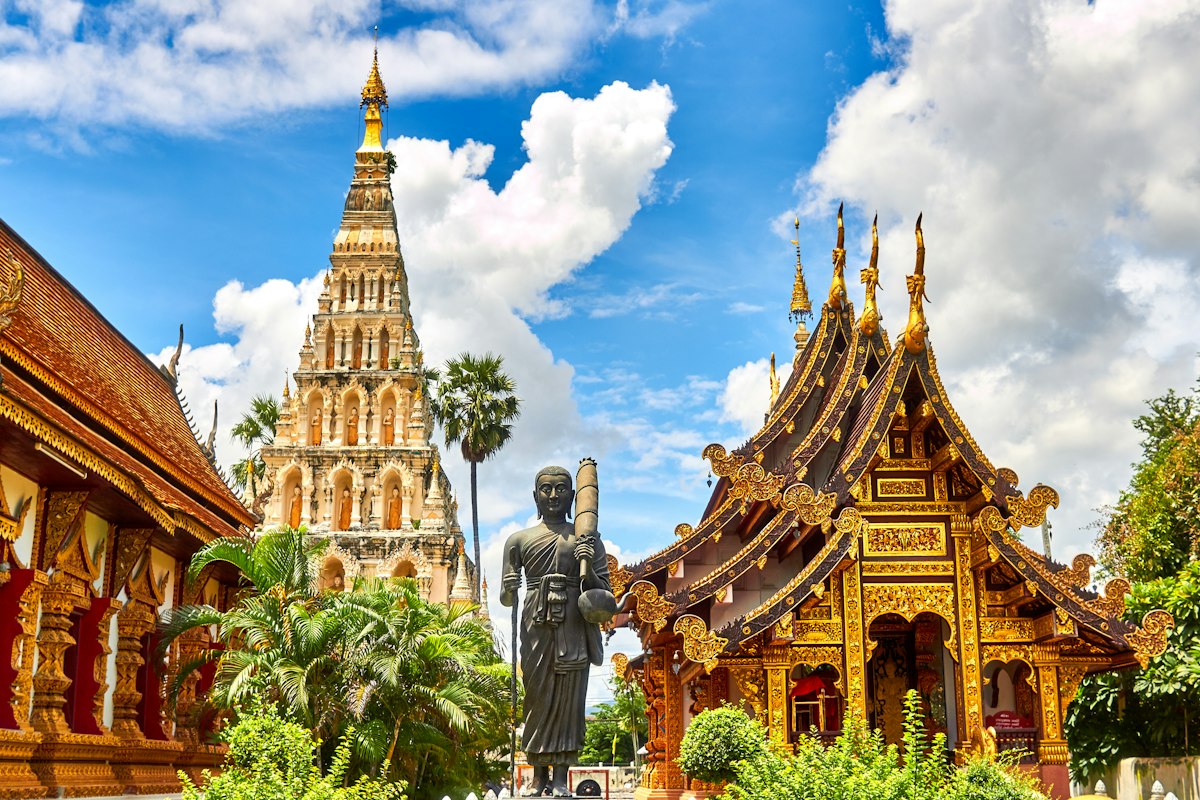
Chiang Mai’s old city and Doi Suthep: Northern Thailand’s cultural capital fits 30-plus temples inside medieval walls barely a mile across. Wat Chedi Luang’s 14th-century pagoda and Wat Phra Singh’s Lanna-style assembly hall anchor the historic zone. Drive 40 minutes up Doi Suthep mountain to the golden temple at 3,520 feet (309-step climb or funicular, $2 entry) for views over the valley and northern hill country.
Food: Thailand wins decisively. Pad krapow, boat noodles, and som tam are daily staples costing $2 to $4 per plate, and the regional variety (southern curries vs. northern sausages) runs deep. Bali’s warung food is solid (nasi campur, mie goreng), but it repeats quickly.
Nightlife: Thailand again. Bangkok’s rooftop bars (Sky Bar, Octave), Patong’s Bangla Road chaos, and Chiang Mai’s night markets offer more range. Bali’s Seminyak beach clubs (Potato Head, Finns) are excellent but limited to the southern coast.
Culture: Bali takes this one. Daily offerings, temple ceremonies, and Balinese Hinduism permeate everyday life in ways that feel less touristy than Thailand’s temple circuits. Catch a Legong dance performance in Ubud for a glimpse of traditions that still shape island rhythms.
Nature: Thailand’s geographic diversity (mountains, islands, jungles, cities) beats Bali’s single-island scope. You get more ecosystems in one trip, from Khao Sok’s rainforest to Koh Tao’s coral reefs.
When to go
Bali: The dry season (May to September) delivers sunny 85°F days and lower humidity, though August sees Australian school holiday crowds and 20% higher hotel rates. June and September offer the sweet spot: clear weather, thinner crowds, and better deals. October and November mark the shoulder season with afternoon showers but greener landscapes. December to March is wet season proper, with January averaging 14 inches of rain and February the soggiest at 11 inches. Nyepi (Balinese New Year, late March) shuts down the island for 24 hours of silence, a unique cultural experience if you plan around it.
Thailand: November to February is peak season nationwide, with Bangkok hitting comfortable 80°F to 85°F instead of the 95°F sweat of April and May. December and January bring European escapees and premium pricing (30% to 50% higher). March and April turn brutally hot (95°F to 100°F), though Songkran (Thai New Year, mid-April) makes up for it with nationwide water fights. May to October is monsoon season, but it’s regional: southern Gulf islands (Koh Samui, Koh Phangan) stay drier July to September, while Phuket and Krabi get hammered. Chiang Mai’s cool season (November to February) drops to 60°F mornings, perfect for trekking.
Who should pick Bali
- Couples seeking villa privacy without Caribbean flight times, especially if you’re based on the West Coast.
- Yoga practitioners ready to dive into week-long retreats in Ubud or Canggu without changing locations.
- Surfers chasing consistent swells at Uluwatu, Padang Padang, or Canggu’s beach breaks (May to September).
- First-timers to Asia wanting a digestible introduction with fewer logistical curveballs than multi-city Thailand.
- Travelers who value walkable neighborhoods and don’t need to island-hop to feel satisfied.
Who should pick Thailand
- Food obsessives planning entire days around market tours, cooking classes, and regional specialties.
- Groups wanting variety in one trip: beaches, mountains, cities, and ancient ruins without backtracking.
- Budget backpackers stretching two weeks on $50 daily (hostels, street eats, public buses).
- Divers and snorkelers targeting Similan Islands, Koh Tao, or Richelieu Rock (February to April).
- History buffs drawn to Ayutthaya’s 14th-century temple ruins and Sukhothai’s UNESCO sites.
Or visit both?
The two-hour flight from Bangkok to Denpasar (Bali) costs $120 to $220 roundtrip on AirAsia or Thai Lion Air, making a combined trip entirely workable. A solid two-week plan: five days in Thailand (three in Bangkok, two in Chiang Mai or beach time in Krabi), fly to Bali for seven days (split between Ubud and the coast), then two final days back in Bangkok if your international flight routes through there.
Day-by-day breakdown: Days 1 to 3 explore Bangkok’s temples, markets, and rooftop bars. Day 4 fly to Chiang Mai for temple circuits and a cooking class. Day 5 travel day to Bali. Days 6 to 8 settle into Ubud for rice terraces, Monkey Forest, and a Mount Batur sunrise trek. Days 9 to 12 shift to Seminyak or Uluwatu for beach clubs, surf lessons, and the Kecak dance. Days 13 to 14 return to Bangkok for last-minute shopping at Chatuchak Weekend Market before flying home.
This routing works because both countries share visa-friendly policies for most Western passport holders (30-day visa exemptions), and the flight between them is shorter than most U.S. domestic hops.
Bottom line
Thailand wins for travelers who want maximum variety and the best food on Earth, particularly if you have 10-plus days and enjoy moving between regions. Bali counters with a more intimate, spiritually grounded experience that doesn’t require constant repacking. If you’re torn, your deciding factor is simple: pick Thailand for exploration and sensory overload, pick Bali for depth and decompression. For villa honeymoons or yoga-focused trips, Bali’s concentrated charm beats Thailand’s sprawl. For first visits to Southeast Asia where you want temples, beaches, mountains, and cities in one journey, Thailand delivers more postcards per dollar. Either way, you can find hotels in Thailand from $60 and start building that two-week itinerary now.
FAQs
Which is cheaper, Bali or Thailand?
Bali edges ahead slightly on accommodation ($45 vs. $60 baseline hotel rates) and daily meal costs, but Thailand’s budget infrastructure (overnight trains, $1 street meals, cheap domestic flights) stretches your dollar further on longer trips. A five-day mid-range trip costs roughly $2,200 in Bali vs. $2,400 in Thailand. Flights from the U.S. run $100 to $200 cheaper to Bangkok than Bali on average. Overall, Bali wins for week-long stays, Thailand wins for two-week explorations.
Which is safer?
Both rank as safe destinations with low violent crime rates. Bali’s main risks are scooter accidents (rent a helmet, skip riding after dark) and occasional petty theft in Kuta. Thailand sees more scams targeting tourists in Bangkok (gem shop cons, tuk-tuk overcharges) and some late-night incidents in party zones like Patong. Chiang Mai and smaller Thai islands feel as secure as Ubud. Neither requires unusual precautions beyond standard travel sense.
Which is better for families?
Bali works better for families with young kids due to shorter distances, villa accommodations with private pools, and calmer beaches (Sanur, Nusa Dua). Thailand suits families with teens craving variety: Bangkok’s markets, Chiang Mai elephant sanctuaries, and snorkeling in the Phi Phi Islands offer more activity diversity. Both have excellent pediatric care in major tourist zones. Thailand’s longer internal travel times (five-hour drives, overnight trains) test patience with toddlers.
Which is better for first-time international travelers?
Bali is more forgiving. English is widely spoken in tourist areas, the island’s compact size prevents major navigation disasters, and cultural norms feel less foreign. Thailand’s size and regional differences (Bangkok’s chaos vs. Chiang Mai’s calm) require more planning confidence. That said, Thailand’s tourist infrastructure is bulletproof after decades of hosting backpackers, so neither will leave beginners stranded. Choose Bali if you want simplicity, Thailand if you’re ready for a bigger challenge with better rewards.
Can I see both in one trip?
Absolutely. The two-hour Bangkok to Bali flight costs $120 to $220 and turns easily into a 12 to 14-day Southeast Asia sampler. Start in Bangkok for three days (temples, street food, nightlife), add Chiang Mai or southern beaches for two days, fly to Bali for a week (Ubud plus coast), then loop back through Bangkok if your international routing requires it. Budget an extra $300 for the intra-Asia flight and one positioning day, but the cultural contrast makes it worthwhile.