




Quick Answer
Osaka is famous for its street food culture and energetic nightlife, drawing travelers who want to eat their way through Japan without the formality of Tokyo. Hotels start around $120/night, and the best time to visit is March to April for cherry blossoms or October to November for cooler weather and fewer crowds.
Explore Osaka in Detail
Find Hotels in Osaka
Hotel listings for Osaka are currently being updated.
Top Tours in Osaka

Osaka Street Food Night Tour in Dotonbori
Walk through Dotonbori and Namba sampling takoyaki, okonomiyaki, and kushikatsu with a local guide explaining the history behind each dish and neighborhood.
Book This Tour →
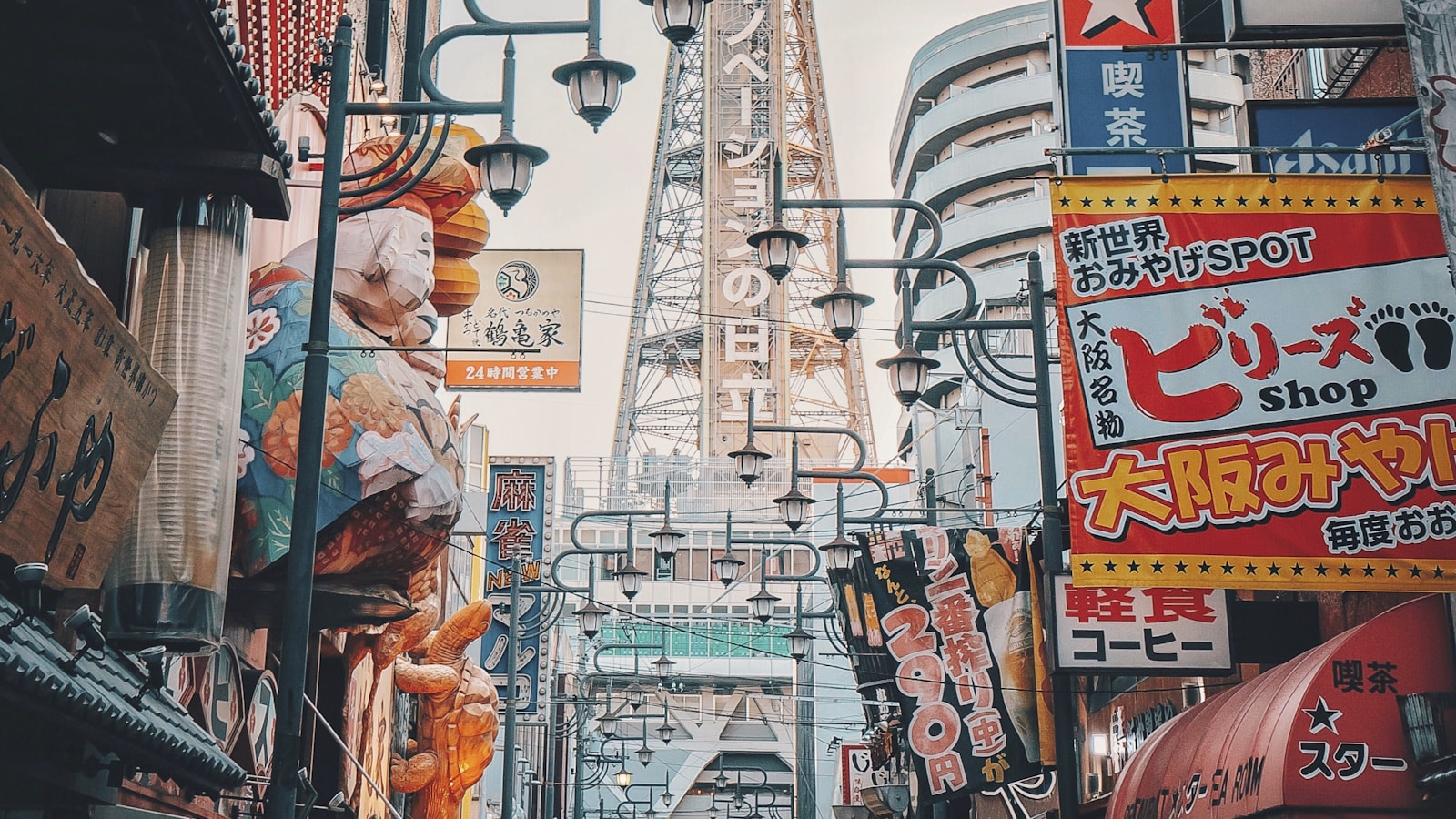
Osaka Castle and Shinsekai Walking Tour
Covers Osaka Castle Park and the retro Shinsekai district, with stops at the Tsutenkaku Tower area and a kushikatsu lunch included at a local restaurant.
Book This Tour →
Kuromon Market, Namba, and Osaka Food Culture Day Tour
Starts at Kuromon Ichiba market for fresh seafood tastings, moves through Namba's covered shopping arcades, and finishes with a hands-on takoyaki cooking session.
Book This Tour →Top Things to Do in Osaka
The experiences travelers come back to Osaka for, year after year.
Itineraries for Osaka
Day-by-day plans built by travelers who actually went.
Osaka in 3 Days
The essential first-time itinerary — the must-sees you came for, plus the local moments you came home talking about.
Osaka for Couples
Quiet mornings, slow dinners, and the views the brochures don't show. Built for two.
Osaka with Kids
Activities everyone enjoys, restaurants that welcome little ones, and downtime built into the plan.
Getting Around Osaka
Renting a car is one of the best ways to explore Osaka at your own pace. Compare rates from all major suppliers in one search.
Best Time to Visit Osaka
Best months to visit Osaka: April–June and September–October offer mild weather and fewer crowds. July–August is peak season. December–February is coldest but cheapest.
Why Visit Osaka?
Osaka runs on a different frequency than most Japanese cities. The locals have a reputation for being louder, friendlier, and more food-obsessed than anywhere else in the country, and the city earns that reputation quickly. The Dotonbori district, a canal-side strip of neon signs and restaurant facades in Chuo Ward, is where most travelers land first. It is walkable, chaotic in the best way, and delivers on the promise of takoyaki (octopus balls, typically around 600 yen for six pieces) and kushikatsu (skewered, battered, deep-fried meat and vegetables) within the first hour.
Beyond the food corridor, Osaka has layers worth exploring over several days. Osaka Castle, rebuilt in the 1930s on the site of the original 16th-century fortress, sits inside a park that fills with cherry blossom viewers in spring and is freely accessible on the grounds even if you skip the interior museum fee of around 600 yen. The Shinsekai neighborhood in Naniwa Ward offers a time-capsule feel, with retro signage, cheap kushikatsu joints, and a pace that resists gentrification. Travelers who make it out to the Kuromon Ichiba market, a covered market with roughly 150 stalls near Namba, find vendors selling fresh seafood, wagyu beef skewers, and seasonal produce in a working-market atmosphere that has operated in some form since the early 1900s. For a full cultural contrast, the Sumiyoshi Taisha shrine, one of Japan’s oldest, sits in the southern part of the city away from tourist clusters and offers a quieter, more meditative experience than the busier central sights.
The city also functions as a base for day trips. Kyoto is about 15 minutes by shinkansen or 75 minutes on the Hankyu limited express, making it entirely reasonable to spend a morning at Fushimi Inari and be back in Osaka for dinner. Nara, home to free-roaming deer and the Todai-ji temple housing Japan’s largest bronze Buddha, sits about 50 minutes away by express train. Staying in Osaka for those excursions typically costs less than equivalent accommodation in Kyoto while keeping access to the same sites.
Frequently Asked Questions — Osaka
How much do hotels in Osaka cost?
Budget travelers can find clean, well-located business hotels like Dormy Inn properties starting around $80 to $120 per night. Mid-range options in Namba or Shinsaibashi run $120 to $200, while luxury hotels such as the Ritz-Carlton or Conrad Osaka push well above $400. Prices spike significantly during cherry blossom season in late March and early April.
When is the best time to visit Osaka?
March to April brings cherry blossoms to Osaka Castle Park and a festive atmosphere, though it is also the busiest and most expensive period. October and November offer comfortable temperatures in the 15 to 20 Celsius range, thinner crowds, and autumn foliage. July and August are hot and humid, with temperatures regularly above 35 Celsius, which makes outdoor sightseeing tiring.
How many days do I need in Osaka?
Three full days covers Osaka's main neighborhoods including Dotonbori, Shinsekai, and Osaka Castle comfortably. A fourth or fifth day allows for day trips to Kyoto or Nara without feeling rushed. Travelers who are serious about food and markets could fill a week without running out of things to eat or explore.
Is Osaka safe for tourists?
Osaka is considered one of the safer large cities in Asia, with low rates of violent crime and a well-lit, heavily trafficked city center that feels manageable at night. Dotonbori and Namba areas are busy until late evening and generally comfortable for solo travelers. Standard precautions around crowded areas apply, as pickpocketing, while rare, does occur in tourist-dense spots.
What area should I stay in?
Namba is the most central option for food and nightlife access, putting Dotonbori, Kuromon Market, and the Shinsaibashi shopping arcade within walking distance. Umeda, in the north near Osaka Station, suits travelers who want easier bullet train access to Tokyo or Kyoto and a slightly calmer base. Both neighborhoods have good subway connections to the rest of the city.
How do I get around Osaka?
The Osaka Metro network covers most of the city efficiently, with fares starting around 180 yen per ride. A one-day subway pass costs 800 yen and makes sense if you plan to cross between Umeda, Namba, and Tennoji in a single day. IC cards like Suica or ICOCA work on subways, buses, and convenience store purchases, and are the most practical option for multi-day stays.
What food should I try in Osaka?
Takoyaki (grilled octopus balls with bonito flakes and sauce) and okonomiyaki (savory cabbage pancakes) are the dishes most associated with the city and both are widely available in Dotonbori for under 1000 yen. Kushikatsu, deep-fried skewered ingredients eaten with a shared dipping sauce, is best tried in Shinsekai at traditional standing counters. Ramen, particularly the lighter chicken and seafood broths popular locally, and fresh seafood from Kuromon market round out the essential eating list.